5 Disturbing Facts you should know about Sea-Level Rise
- The Green Earth Initiative

- Oct 11, 2020
- 3 min read
Sea level rise is an increase in the level of the world’s oceans due to the effects of global warming. Burning fossil fuels is one of the causes of global warming because it releases carbon dioxide and other heat-trapping gasses into the atmosphere. The oceans then absorb the majority of this heat. As water becomes warmer, it expands. This results in ocean levels rising worldwide.

When sea levels rise as rapidly as they have been, even a small increase can have devastating effects on coastal habitats farther inland, it can cause destructive erosion, wetland flooding, aquifer and agricultural soil contamination with salt, and lost habitat for fish, birds, and plants.
Higher sea levels are coinciding with more dangerous hurricanes and typhoons that move more slowly and drop more rain, contributing to more powerful storm surges that can strip away everything in their path. One study found that between 1963 and 2012, almost half of all deaths from Atlantic hurricanes were caused by storm surges.
Already, flooding in low-lying coastal areas is forcing people to migrate to higher ground, and millions more are vulnerable to flood risk and other climate change effects. The prospect of higher coastal water levels threatens basic services such as Internet access since much of the underlying communications infrastructure lies in the path of rising seas.
1. Seas already are rising because of climate change.
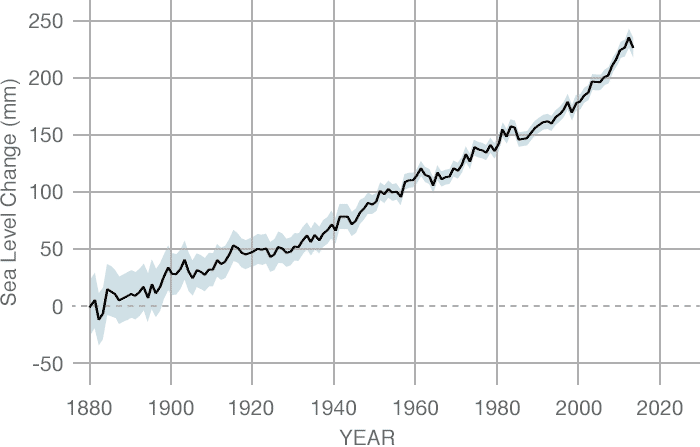
Global Sea Levels Have Already Risen by 8 Inches (200 mm) Since 1880.
The chart above was produced by NASA's Earth Observatory, based on data from the U.S. National Oceanic and Atmospheric Administration (NOAA) and Australia's Commonwealth Scientific and Industrial Research Organization (CSIRO). Most of those historical data come from tide-gauge measurements, which are now complemented by satellite observations.
2. Sea levels have changed by hundreds of feet in the past.

That's the Fastest Sea-Level Rise Earth Has Experienced in 3,000 Years. If not for surging carbon dioxide in the atmosphere, sea levels should have only risen about an inch or two last century and might have even fallen. Instead, thanks to the highest CO2 levels at any point in human history, global sea levels rose by 5.5 inches (14 cm) between 1900 and 2000. That's the fastest oceanic advance in 27 centuries, according to a study published in February 2016, and it's still speeding up.
It's happening faster than scientists expected, and the collapse of the enormous West Antarctic Ice Sheet now "appears unstoppable," according to NASA.
3. We could melt it all.

The Earth has already warmed by 1 degree Celsius (1.8 degrees Fahrenheit) above pre-industrial levels. Scientists estimate that if it warms by about 4 to 5 degrees Celsius (7.2 to 9 degrees Fahrenheit), which is projected to happen by the end of the century if we don’t act on climate change, then all the ice will eventually melt. That’s 230 feet of sea-level rise.
4. Up to 216 Million People Currently Live on Land That Will Be Below Sea Level or Regular Flood Levels by 2100.

Maybe that doesn't sound like much -- but 147 million to 216 million people worldwide can expect to see their homes submerged or put at risk for regular flooding by 2100.
5. It Can Also Threaten Coastal Plant and Animal Life

Humans aren't the only ones who'll suffer as sea levels rise. Any coastal plants or animals that can't quickly move to new, less flood-prone habitats could face dire consequences. As one study published in Royal Society Open Science noted, sea turtles have a long-established habit of laying eggs on beaches, which need to stay relatively dry for their babies to hatch.


Comments